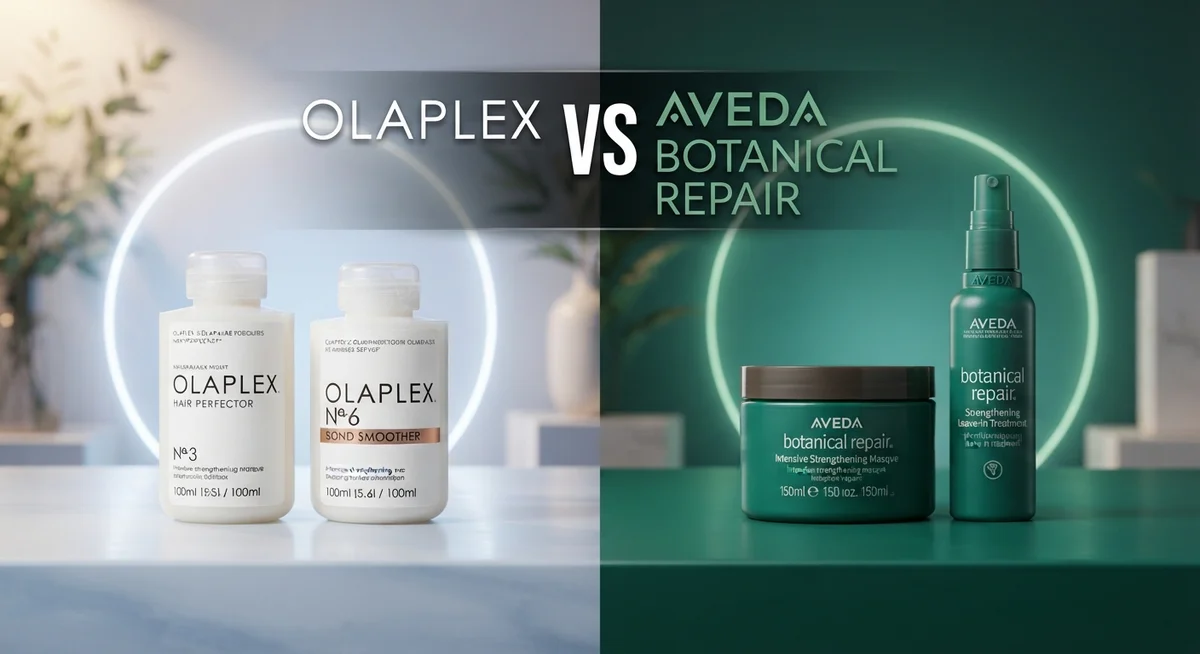
Olaplex vs Aveda Botanical Repair: Which Bond-Repair Works Best?
Damaged hair needs the right treatment. Two brands lead this space, but they take different paths to healthy strands.
Olaplex relies on patented bond-building technology. It repairs structural damage deep inside each strand.
Aveda Botanical Repair takes a plant-based route. It uses botanical bond molecules and natural oils to restore hair health.
Both products protect against heat and target hair repair. But their formulas, ingredients, and results differ in important ways.
This guide compares both options side by side. We look at their technology, strengths, and weaknesses.
You will learn which product suits chemically damaged hair. You will also see which one fits a more natural hair care routine.
By the end, you will know exactly which treatment matches your hair goals. Let us break down how Olaplex and Aveda Botanical Repair really compare.
Quick Comparison: Olaplex vs Aveda Botanical Repair
| Feature | Olaplex | Aveda Botanical Repair |
|---|---|---|
| Core Technology | Patented bond-building chemistry | Plant-derived bond molecules |
| Heat Protection | Up to 450°F/232°C | Up to 450°F |
| Formula Type | Sulfate-free, concentrated | 94% naturally derived, vegan |
| Product Range | No.0–No.9 system | Leave-in treatment + shampoo |
| Moisture/Conditioning | Limited conditioning benefits | Botanical oils, but greasy |
| Styling Versatility | Air-dry, blow-dry, diffuse | Poor frizz control |
| Detangling Performance | Effective detangling | Limited detangling effectiveness |
| Best For | Chemically damaged, bleached hair | Cost-conscious natural product users |
Olaplex Review

- No.4 Bond Maintenance Shampoo + No.5 Bond Maintenance Conditioner strengthen and protect hair health
- No.4 Bond Maintenance Shampoo + No.5 Bond Maintenance Conditioner reduce breakage, frizz, and split ends
- No.7 Bonding Oil boosts shine, softness, and provides 72-hour frizz control

Last update on 2026-10-24 / Affiliate links / Images from Amazon Product Advertising API
Olaplex is a professional-grade hair repair system built on patented bond-building technology that reconnects broken molecular chains in damaged hair. It works best for anyone with chemically treated, bleached, or severely compromised hair that needs structural restoration.
The product line spans from No.0 (intensive treatment) through No.9 (styling products), giving you a complete system for home care. Each formula uses a concentrated dime-size amount, so one bottle lasts significantly longer than traditional treatments.
Olaplex delivers heat protection up to 450°F (232°C) and maintains excellent lather despite being sulfate-free. Real-world results show visibly stronger, shinier hair with improved texture and manageability across air-dry, blow-dry, and diffused styling methods.
The formula is heavier than lightweight conditioners, which means it works best for thick or coarse textures rather than fine hair. Bond-building remains its primary strength; moisture and conditioning benefits take a back seat to structural repair.
Pros
- Patented technology specifically targets and rebuilds broken disulfide bonds in the hair shaft
- Sulfate-free yet produces a rich lather for effective cleansing
- Highly concentrated formula means less product needed per application
- Delivers versatile styling results across multiple application methods
Cons
- Heavy texture may weigh down fine or thin hair types
- Limited conditioning and moisturizing benefits compared to traditional treatments
- Bond-builder focus means it does not replace a full conditioning routine
Aveda Botanical Repair Review

- For all hair types and textures; Safe for color treated and chemically processed hair; Vegan and cruelty free
- Instantly detangles to prevent breakage; Reduces frizz and flyaways
- Plant-derived technologies instantly repairs hair from inside out and builds bonds at the core for stronger...
Last update on 2026-10-24 / Affiliate links / Images from Amazon Product Advertising API
Aveda Botanical Repair offers a plant-based approach to hair restoration that appeals to consumers seeking natural ingredients. This line combines plant-derived bond molecules with botanical oils to address damage at multiple levels, from the hair cortex to the surface.
The formula delivers heat protection up to 450°F (232°C) and maintains a 94% naturally derived composition. Every product in the range is 100% vegan and cruelty-free, making it ideal for environmentally conscious users.
The system includes both leave-in treatments and shampoos, giving you flexibility in how you apply repair. Real-world users report that the botanical approach works well for those seeking gentler, plant-based alternatives to synthetic repair systems.
This product suits anyone wanting natural ingredients without sacrificing repair benefits. It performs best on moderately damaged hair rather than severely bleached strands.
Pros
- Plant-based formula appeals to eco-conscious and vegan consumers
- Multi-level repair targets cortex and surface damage simultaneously
- Complete system with leave-in treatments and shampoos for customized care
- Heat protection reaches 450°F for styling versatility
Cons
- Greasy residue reported by some users; can weigh hair down
- Plant-based bonds lack the clinical proof behind patented technologies
- Poor frizz control compared to heavier repair systems
Head to Head: Key Differences
Olaplex and Aveda Botanical Repair take fundamentally different approaches to hair repair. Olaplex uses patented chemistry that reconnects broken disulfide bonds inside the hair shaft, while Aveda relies on plant derived bond molecules combined with botanical oils.
The texture and feel differ noticeably between these two products. Olaplex delivers a heavier formula that concentrates its power, so you need only a dime sized amount per application.
Aveda Botanical Repair users report a greasy residue that can weigh hair down, especially on fine or thin textures.
Both products offer identical heat protection at 450°F (232°C), so thermal styling safety is equal. However, their repair depth works differently—Olaplex targets structural damage at the bond level, while Aveda addresses both cortex and surface layers simultaneously.
The ingredient philosophy sets them apart clearly. Aveda commits to 94% naturally derived, 100% vegan formulas that appeal to eco conscious consumers.
Olaplex prioritizes scientific efficacy through its proprietary bond building technology, which has stronger clinical backing than plant based alternatives.
Application flexibility varies too. Olaplex works across a complete system from intensive treatments (No.0) through styling products (No.9), letting you customize your routine.
Aveda offers leave in treatments plus shampoos, giving you similar customization but through a smaller product range.
Frizz control and detangling show real world differences. Olaplex excels at versatile styling—air dry, blow dry, or diffuse methods all work well.
Aveda struggles with frizz control and detangling effectiveness, which matters if you have textured or curly hair.
The core difference comes down to this: choose Olaplex if you need proven structural repair for chemically damaged or bleached hair. Choose Aveda if natural ingredients and plant based science align with your values.
Which One Should You Buy
Olaplex comes out as the overall winner in this comparison. Its patented bond-building technology delivers proven, targeted repair for damaged hair structures.
This gives Olaplex a clear edge in effectiveness over Aveda’s plant-based formula. The science-backed approach simply works harder on broken hair bonds.
Aveda still holds value for a different kind of hair goal. Your choice depends on what your hair truly needs.
Best for each buyer
- Olaplex: Best for individuals with chemically damaged or bleached hair who need intensive structural repair.
- Aveda Botanical Repair: Best for consumers who want a natural, plant-based haircare option with multi-level repair benefits.
Frequently Asked Questions
Which product works better for bleached hair?
Olaplex wins here. Its patented bond-building technology targets the structural damage that bleaching causes.
The formula repairs broken molecular bonds inside your hair shaft, which is exactly what bleached strands need. Aveda uses plant-based molecules instead, which work differently and lack the same clinical backing for severe damage.
Can I use either product on color-treated hair?
Yes, both work on color-treated hair. Olaplex excels at repairing the internal structure that coloring damages.
Aveda’s plant-based approach also suits color-treated strands, though it focuses more on surface and cortex repair rather than deep structural fixing.
Which leaves hair feeling lighter?
Aveda users often report a greasy residue that weighs hair down. Olaplex’s heavy formula is concentrated, so you use less product, but it still feels rich.
If you have fine or thin hair, neither is ideal for a light, bouncy feel. Olaplex performs better here because a dime-size amount goes a long way.
Do both products offer heat protection?
Yes, both protect hair up to 450°F (232°C). Thermal safety is identical between them.
Your choice should depend on repair style and ingredients, not heat protection.
Which suits natural product seekers?
Aveda Botanical Repair is 94% naturally derived and 100% vegan. If plant-based formulas matter to you, Aveda aligns with that goal.
Olaplex uses synthetic bond-building chemistry instead. Both are sulfate-free, but Aveda’s ingredient list appeals more to eco-conscious users.

Dillip is a passionate lifestyle blogger and product enthusiast dedicated to helping readers navigate the ever-evolving world of fashion, beauty, and wellness. With a keen eye for quality and a commitment to honest reviewing, Dillip combines thorough research with practical insights to deliver trustworthy recommendations.