How to Wake Up Feeling Rested Without an Alarm?
Do you dread the sound of your morning alarm? That loud, sudden noise rips you out of sleep and leaves you groggy, grumpy, and exhausted. You are not alone. Millions of people start their day in a fog because their alarm clock interrupts deep sleep at the worst possible moment. This groggy feeling has a name: sleep inertia. It happens because your brain gets jolted out of a sleep stage before it is ready.
Here is the good news. Your body already has a powerful internal clock that can wake you up at the right time, during a lighter phase of sleep, so you feel alert and refreshed from the moment your eyes open. The key is learning how to work with your biology instead of against it.
This post gives you 15 clear, actionable strategies to ditch the alarm and wake up feeling truly rested. Every tip is based on science, and you can start applying them tonight.
Whether you are a student, a busy professional, or a parent running on empty, these methods will help you reclaim your mornings. Read on to learn exactly how to train your brain and body to wake up on their own.
In a Nutshell
- Your body has a built in 24 hour clock called the circadian rhythm. This internal system controls when you feel sleepy and when you feel alert. Once you align your daily habits with this clock, you can wake up naturally without any external alarm.
- Sleep inertia is the main reason alarms make you feel terrible. An alarm can pull you out of deep non REM sleep mid cycle. Waking up naturally allows your brain to finish a full sleep cycle and surface during lighter sleep, which leaves you feeling clear headed and energized.
- A consistent sleep schedule is the single most powerful tool for training your body to wake up at the same time each day. Going to bed and waking up at the same time, including weekends, teaches your brain to predict and prepare for waking.
- Morning sunlight resets your circadian rhythm every day. Getting at least 15 to 30 minutes of natural light exposure in the morning suppresses melatonin and boosts alertness hormones. This is one of the simplest and most effective steps you can take.
- Sleep environment matters more than most people realize. A cool, dark, and quiet bedroom supports deeper, more continuous sleep. Research shows the ideal bedroom temperature falls between 60 and 68 degrees Fahrenheit for most adults.
- Avoiding caffeine, alcohol, screens, and heavy meals before bed protects your sleep quality. Even small disruptions to your evening routine can delay sleep onset and cause you to rely on an alarm the next morning.
Why Alarm Clocks Disrupt Your Natural Sleep
An alarm clock does not care what stage of sleep you are in. It goes off at a fixed time regardless of whether your brain is in light sleep or the deepest phase of non REM sleep. A neurologist from The Conversation explained it this way: waking up naturally is like getting off a train when it stops at a station. An alarm is like jumping off the train between stops. The result is a jolt to your system.
This jolt triggers sleep inertia, a state of grogginess and reduced cognitive function that can last 15 to 60 minutes after waking. Research published in the Journal of Clinical Sleep Medicine found that using a snooze alarm actually prolongs sleep inertia because it forces repeated awakenings from fragmented sleep. Each time you hit snooze, you drift back into sleep only to be yanked out again.
Your body also responds to alarm stress with a spike in cortisol, the stress hormone. Starting each day with a cortisol surge can lead to elevated anxiety, irritability, and even long term health issues. People who wake up naturally report better mood, sharper focus, and more consistent energy throughout the day. Understanding this science is the first step toward freeing yourself from the alarm.
How Your Circadian Rhythm Controls Your Wake Up Time
Your circadian rhythm is a 24 hour internal clock that runs in the background of your brain. It cycles between sleepiness and alertness at regular intervals. The suprachiasmatic nucleus, a tiny region in the hypothalamus, acts as the master clock. It receives direct input from light entering your eyes and uses that information to synchronize your sleep and wake patterns with the outside world.
The National Institutes of Health notes that most people’s natural circadian cycle is slightly longer than 24 hours. This is why daily light exposure is so important. Without it, your clock would slowly drift later and later. Light acts as the primary reset button, pulling your cycle back into alignment each morning.
Your body also releases hormones on a circadian schedule. Melatonin production ramps up in the evening as darkness falls, signaling your brain that sleep is near. Cortisol rises in the early morning hours, preparing your body to wake up. If you keep a consistent schedule, your brain learns to anticipate your wake up time and begins this cortisol rise before you even open your eyes. That is why people with regular routines often wake up a minute or two before their alarm would go off. Your brain is already prepared.
Set a Consistent Sleep Schedule and Stick to It
The Sleep Foundation highlights that self awakening is far more common in people who maintain a fixed sleep schedule. This is the foundation of alarm free mornings. Your brain thrives on predictability. When you go to bed and wake up at the same time every day, your internal clock locks into a pattern.
Choose a bedtime that allows you to get 7 to 9 hours of sleep, which is the recommended range for most adults according to the National Sleep Foundation. Count backward from your desired wake up time. For example, if you want to wake at 6:30 AM and you need 8 hours of sleep, aim to fall asleep by 10:30 PM.
The hardest part for most people is keeping this schedule on weekends. Sleeping in on Saturday and Sunday creates what researchers call “social jet lag.” It shifts your circadian rhythm just like traveling across time zones. By Monday morning, your body clock is confused, and you feel terrible. Staying within 30 minutes of your regular schedule, even on days off, prevents this problem.
Pros: This method is free, requires no special tools, and delivers the most reliable results over time. Cons: It demands discipline, especially on weekends and social occasions. It may take 2 to 4 weeks of consistency before your body fully adjusts.
Get Morning Sunlight to Reset Your Internal Clock
Morning light exposure is one of the most powerful signals your brain uses to regulate sleep and wakefulness. When natural light enters your eyes, it suppresses melatonin and triggers a cascade of alertness signals. The Sleep Foundation recommends at least 30 minutes of daylight exposure every morning to support a healthy sleep wake cycle.
You do not need to stare directly at the sun. Simply step outside, walk your dog, or drink your coffee near a window with direct sunlight. Even on overcast days, outdoor light is significantly brighter than indoor lighting. A cloudy sky delivers roughly 10,000 lux of light, while a well lit room provides only about 500 lux.
If you live in a region with dark winters or you wake up before sunrise, consider using a light therapy lamp that provides at least 10,000 lux. Dawn simulators are another helpful tool. These devices gradually increase bedroom light over 15 to 45 minutes before your wake up time, mimicking a natural sunrise. A study published in the European Journal of Applied Physiology found that dawn simulators improved alertness and cognitive function after waking.
Pros: Extremely effective, supported by strong evidence, and beneficial for mood and energy beyond sleep. Cons: Limited effectiveness in dark winter climates without supplemental lighting. Requires you to spend time outdoors or near windows each morning.
Understand and Work With Your Sleep Cycles
Sleep occurs in cycles that last approximately 90 minutes each. Each cycle moves through four stages: three non REM stages and one REM stage. Non REM Stage 3 is the deepest sleep. REM sleep is lighter, and this is where most dreaming occurs. Most people go through 4 to 6 full cycles per night.
The key insight is that you feel most refreshed when you wake up at the end of a complete cycle, during lighter sleep. If an alarm forces you awake during deep non REM Stage 3, you experience significant sleep inertia. This is the biological reason some people feel worse after sleeping 8 hours than after sleeping 7.5 hours. The extra 30 minutes put them in the middle of a deep sleep phase.
To use this knowledge, plan your sleep in multiples of 90 minutes. Common targets are 6 hours (4 cycles), 7.5 hours (5 cycles), or 9 hours (6 cycles). Add about 15 minutes for the time it takes to fall asleep. Keep in mind that 90 minutes is an average. Individual cycles can range from 75 to 120 minutes, so this method works best when combined with a consistent schedule that lets your body fine tune the timing.
Pros: Helps you choose a bedtime that maximizes restfulness. Simple math that anyone can apply. Cons: Cycle length varies between individuals and even between nights. It is an approximation, not an exact science.
Create a Sleep Friendly Bedroom Environment
Your bedroom should serve one primary purpose: sleep. Research from the National Institutes of Health shows that the optimal bedroom temperature for sleep is between 60 and 68 degrees Fahrenheit (about 15 to 20 degrees Celsius). Your body temperature naturally drops as you fall asleep, and a cool room supports this process.
Darkness is equally important. Even small amounts of light can interfere with melatonin production. Use blackout curtains or a quality sleep mask to block street lights, electronics, and early morning light if you are not yet ready to wake. Remove or cover any devices that emit standby lights.
Noise control also plays a role. Sudden sounds can pull you out of deep sleep and fragment your rest. If you live in a noisy area, a fan or a dedicated white noise source can help maintain a consistent sound environment. The goal is to create conditions that allow your body to complete full sleep cycles without interruption, so you wake naturally at the right moment.
Pros: Improvements are often immediate once changes are made. Supports deeper, unbroken sleep. Cons: May require an initial investment in curtains, bedding, or temperature control. Shared bedrooms may limit your ability to control the environment.
Limit Blue Light and Screen Time Before Bed
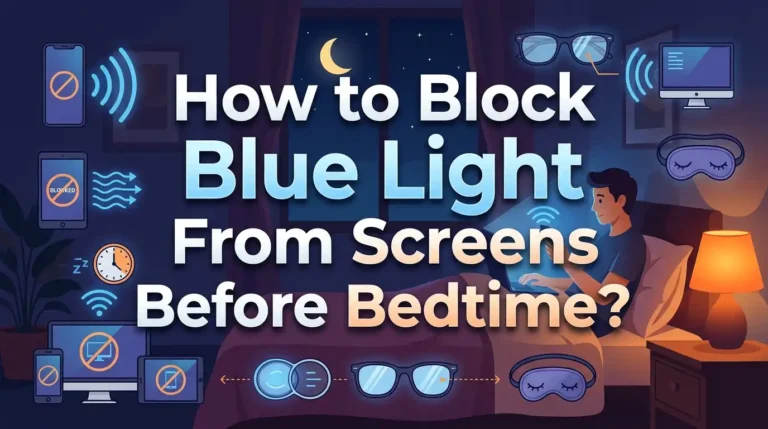
The Cleveland Clinic explains that your pineal gland produces the most melatonin in darkness. Blue light from screens directly suppresses this process. Phones, tablets, computers, and televisions emit blue wavelengths that trick your brain into thinking it is still daytime. This delays the onset of sleepiness and pushes your sleep schedule later.
The solution is straightforward. Stop using screens at least 60 to 90 minutes before bed. If you must use a device, enable its built in night mode or blue light filter. Wearing blue light blocking glasses in the evening can also help, though they are less effective than simply avoiding screens.
Replace screen time with calming activities. Read a physical book, practice gentle stretching, write in a journal, or have a relaxed conversation. Dimming the lights in your home about two hours before bedtime further supports melatonin production. Use warm toned bulbs in your bedroom. The National Sleep Foundation recommends red, pink, or incandescent bulbs because they emit minimal blue light.
Pros: Free and easy to implement. Directly addresses one of the most common causes of delayed sleep. Cons: Requires changing deeply ingrained habits. Social and work pressures may make it difficult to disconnect from screens in the evening.
Avoid Caffeine, Alcohol, and Heavy Meals in the Evening
Caffeine is a stimulant with a half life of approximately 5 to 6 hours. That means if you drink a cup of coffee at 3 PM, half of that caffeine is still active in your system at 9 PM. The American Academy of Sleep Medicine found that consuming caffeine 6 hours before bedtime reduces total sleep time by one full hour. For alarm free mornings, set a personal caffeine cutoff of early to mid afternoon.
Alcohol is equally disruptive, though in a different way. A glass of wine may help you feel drowsy, but alcohol fragments sleep architecture. It reduces REM sleep, causes more awakenings in the second half of the night, and leaves you feeling unrested even if you slept for a full 8 hours. Limiting or eliminating alcohol in the evening protects your sleep quality.
Heavy meals close to bedtime force your digestive system to work overtime while your body is trying to wind down. This can cause heartburn, discomfort, and delayed sleep onset. Aim to finish your last major meal at least 2 to 3 hours before bed. If you need a small snack, choose something light that includes protein or complex carbohydrates.
Pros: These changes directly improve sleep quality and are supported by decades of research. Cons: Social situations often involve late meals, caffeine, or alcohol. Changing these habits requires planning and commitment.
Build a Relaxing Bedtime Routine
A bedtime routine signals your brain that sleep is approaching. Think of it as a gradual transition from the activity of your day to the stillness of sleep. Humans respond to ritual and consistency, and your brain learns to associate specific behaviors with falling asleep.
Start your routine 30 to 60 minutes before bed. Choose 3 to 4 calming activities and perform them in the same order each night. Popular options include taking a warm bath or shower, reading a book, practicing deep breathing exercises, or doing light stretching. The warm bath method works especially well because your body temperature drops after you get out, which mimics the natural temperature decline that triggers sleep onset.
Avoid stimulating or stressful activities during this time. Do not check work email, argue about finances, or watch intense television shows. If racing thoughts keep you awake, try writing a brief to do list for the next day. Research shows that offloading worries onto paper helps the brain let go and relax. Consistency is what makes a bedtime routine powerful. After a few weeks, your brain will begin producing melatonin automatically at the start of your routine.
Pros: Reduces time to fall asleep and improves sleep quality. Enjoyable and flexible to personal preferences. Cons: Requires 30 to 60 minutes of dedicated time each evening. May feel forced or awkward at first until the habit forms.
Exercise During the Day, but Not Too Late
Regular physical activity is one of the most effective ways to improve sleep quality. Exercise increases the production of adenosine, a brain chemical that builds sleep pressure throughout the day. It also helps regulate your circadian rhythm by raising core body temperature during the day and allowing it to drop in the evening.
The Mount Sinai Medical Center notes that regular exercise helps regulate your body’s natural sleep wake cycle. Aim for at least 30 minutes of moderate exercise most days of the week. Walking, cycling, swimming, and strength training all work well. Morning and afternoon workouts tend to produce the best sleep benefits.
However, intense exercise within 2 hours of bedtime can have the opposite effect. Vigorous activity elevates your heart rate, core temperature, and adrenaline levels, all of which interfere with falling asleep. If evening is your only option for exercise, choose low intensity activities like yoga or a gentle walk. The goal is to move your body enough to support deep sleep without overstimulating your system close to bedtime.
Pros: Improves overall health alongside sleep quality. Free and adaptable to any fitness level. Cons: Scheduling exercise can be challenging for people with busy lives. Late workouts may backfire if too intense.
Keep Naps Short and Early
Naps can recharge your energy, but they come with a catch. A long or late nap steals sleep pressure from the evening. Adenosine builds up throughout the day, and it is this accumulation that makes you feel sleepy at night. A lengthy afternoon nap reduces adenosine levels, making it harder to fall asleep on time and increasing your dependence on an alarm the next morning.
The Sleep Foundation recommends keeping naps under 20 minutes and finishing them before 3 PM. A short nap allows you to dip into the lightest stages of sleep without entering deep non REM sleep. This prevents the grogginess that often follows longer naps, sometimes called “nap hangover.”
If you find yourself needing long naps regularly, it may be a sign that your nighttime sleep is insufficient or poor quality. Address the root cause rather than relying on daytime naps to compensate. Some people do well with no naps at all, while others thrive with a brief afternoon rest. Pay attention to how naps affect your ability to fall asleep at your target bedtime and adjust from there.
Pros: Short naps can boost alertness and performance. Easy to fit into a lunch break or weekend routine. Cons: Hard to limit once you start napping. Late or long naps directly interfere with nighttime sleep and alarm free mornings.
Use Gradual Light to Replace Your Alarm
Dawn simulators and wake up lights offer a middle ground between a traditional alarm and waking up completely on your own. These devices gradually brighten your room over a period of 15 to 45 minutes before your target wake up time. The slowly increasing light mimics a natural sunrise and gently pulls your brain out of sleep during a lighter phase.
A study in the European Journal of Applied Physiology found that people who used dawn simulators showed improved alertness and better cognitive performance immediately after waking, compared to those who used a standard alarm. The gradual light exposure triggers a natural decline in melatonin and a gentle rise in cortisol, preparing your body for wakefulness without the shock of a sudden alarm.
This method is especially helpful during winter months or for people who must wake up before sunrise. It can also serve as a training tool while you develop the consistent sleep schedule needed to wake up entirely on your own. Over time, many people find they wake up before the light even reaches full brightness, which is a sign that their internal clock has taken over.
Pros: Reduces sleep inertia significantly. Mimics natural biological signals. Good for dark climates. Cons: Requires purchasing a device. May not work well for heavy sleepers or those who share a bedroom with a partner on a different schedule.
Manage Stress and Quiet Your Mind Before Sleep
Stress is one of the most common enemies of quality sleep. When your mind races with worries, deadlines, or unresolved conflicts, your body stays in a state of heightened alertness. Cortisol levels remain elevated, and your nervous system stays in fight or flight mode, making it nearly impossible to fall asleep on time.
Practical stress management techniques can break this cycle. Deep breathing exercises, such as the 4 7 8 method (inhale for 4 seconds, hold for 7, exhale for 8), activate your parasympathetic nervous system and promote relaxation. Progressive muscle relaxation, where you tense and release each muscle group from your toes to your head, is another proven approach.
Mindfulness meditation, even for just 10 minutes before bed, has been shown to reduce the time it takes to fall asleep and improve overall sleep quality. Journaling is another effective tool. Writing down your thoughts, worries, or a plan for the next day gives your brain permission to stop looping through concerns. The goal is to arrive at your pillow with a calm, quiet mind so your body can move smoothly through its natural sleep cycles and wake you at the right time.
Pros: Addresses a root cause of poor sleep for many people. Techniques are free and available to everyone. Cons: Requires regular practice to see consistent results. Some people may need professional support for chronic stress or anxiety.
Track Your Sleep Patterns to Find Your Ideal Schedule
You cannot improve what you do not measure. Tracking your sleep helps you identify patterns, pinpoint problems, and find the schedule that works best for your body. Start with a simple sleep journal. Record your bedtime, estimated time to fall asleep, wake up time, and how you feel in the morning. After two weeks, clear patterns will emerge.
Many people discover they need more or less sleep than they assumed. Some function best on 7 hours while others truly need 9. Your ideal sleep duration is the amount that allows you to wake up naturally, without an alarm, feeling alert within a few minutes. If you consistently wake up before your intended time and feel rested, you may be scheduling too much time in bed.
Sleep tracking apps and wearable devices can add more data, including estimates of time spent in different sleep stages and the number of nighttime awakenings. Use this information to adjust your bedtime incrementally, in 15 minute shifts, until you find the sweet spot. Keep in mind that no tracker is perfectly accurate, so always prioritize how you feel over what a device reports.
Pros: Provides personalized insight into your unique sleep needs. Helps you make targeted adjustments. Cons: Can cause anxiety if you obsess over data (a condition called orthosomnia). Wearable trackers vary in accuracy.
Be Patient and Allow Time for Adjustment
Changing your sleep habits is not an overnight process. Your circadian rhythm needs time to recalibrate, and your body needs to build trust in the new schedule. Expect a transition period of 2 to 4 weeks before you can reliably wake up without an alarm. Some people adjust faster, while others need a full month.
During this transition, you may want to set a backup alarm 15 to 30 minutes after your target wake up time. This serves as a safety net so you do not oversleep for important obligations. Place it in another room so it does not become a crutch. As your body adjusts, you will find yourself waking up naturally before the backup alarm goes off. That is the sign your internal clock is working.
It also helps to recognize your chronotype, which is your genetic predisposition for being a morning person or an evening person. People with an evening chronotype will find it harder to shift their wake up time earlier. This does not mean it is impossible. It means they may need more patience and stricter adherence to the strategies listed above. Work with your biology, not against it, and the results will follow.
Pros: A realistic approach reduces frustration and increases long term success. Cons: The transition period can feel uncomfortable. Life events like travel, illness, or schedule changes can temporarily reset your progress.
Common Mistakes That Keep You Dependent on an Alarm
Many people try to ditch the alarm but fail because of a few repeated mistakes. The most common is inconsistent sleep timing. Staying up late on Friday and Saturday shifts your circadian rhythm and undoes a full week of progress. Even one night of significantly late sleep can require several days to recover from.
Another frequent mistake is relying on willpower alone without changing your environment. If your bedroom is too warm, too bright, or too noisy, no amount of determination will produce quality sleep. Fix the environment first, then build the habits.
Overconsumption of caffeine is another trap. People who drink coffee throughout the afternoon often have no idea how much it is affecting their sleep. The stimulant effect is subtle enough that you may not feel “wired,” but your brain’s ability to enter deep sleep is still compromised. Track your caffeine intake for one week and you may be surprised at the total.
Finally, many people give up too soon. They try for a few days, oversleep once, and conclude that waking up without an alarm does not work for them. Remember, this is a process of retraining your brain. Consistency over weeks, not days, is what produces results.
Frequently Asked Questions
How long does it take to train your body to wake up without an alarm?
Most people need 2 to 4 weeks of consistent sleep and wake times before their body reliably wakes up on its own. Some individuals adjust within one week, while others, especially those with an evening chronotype, may need up to six weeks. The key is maintaining the same schedule every day, including weekends. During the adjustment period, use a backup alarm placed in another room so you do not oversleep for important commitments.
Can everyone learn to wake up without an alarm?
Most healthy adults can train themselves to wake up without an alarm if they follow a consistent schedule and practice good sleep habits. However, people with sleep disorders, shift work schedules, or certain medical conditions may find it much harder. If you have tried these strategies consistently for several weeks and still cannot wake naturally, consider speaking with a sleep specialist to rule out underlying issues.
What should I do if I wake up too early without the alarm?
Waking up earlier than planned is common during the adjustment period. If you feel rested and alert, your body may simply need less sleep than you scheduled. Try shifting your bedtime 15 minutes later and see if that aligns your natural wake up time with your goal. If you wake up early and still feel tired, it could be a sign of stress, anxiety, or a sleep disorder that is fragmenting your rest.
Is it bad to use an alarm as a backup while training?
A backup alarm is a smart safety measure during the transition. Place it in another room and set it 15 to 30 minutes after your target wake up time. This way, it only activates if your internal clock has not done its job. Over time, you will find yourself waking before the backup goes off. Once that happens consistently for two weeks, you can remove it entirely.
Does the 90 minute sleep cycle rule really work?
The 90 minute cycle is a useful guideline, but it is an average. Individual sleep cycles range from 75 to 120 minutes and vary from person to person and even from night to night. Planning your sleep in approximate multiples of 90 minutes can help, but it is not a guarantee. Combining this approach with a consistent schedule gives you the best chance of waking up at the end of a cycle feeling refreshed.
What is the best time to stop drinking coffee for better sleep?
The American Academy of Sleep Medicine recommends avoiding caffeine at least 6 hours before bedtime. For many people, a cutoff of 1 to 2 PM works well if they go to bed around 10 PM. Keep in mind that caffeine sensitivity varies widely. Some people metabolize it quickly, while others feel its effects for 8 to 10 hours. If you are having trouble falling asleep, try moving your cutoff earlier and observe the difference.

Dillip is a passionate lifestyle blogger and product enthusiast dedicated to helping readers navigate the ever-evolving world of fashion, beauty, and wellness. With a keen eye for quality and a commitment to honest reviewing, Dillip combines thorough research with practical insights to deliver trustworthy recommendations.